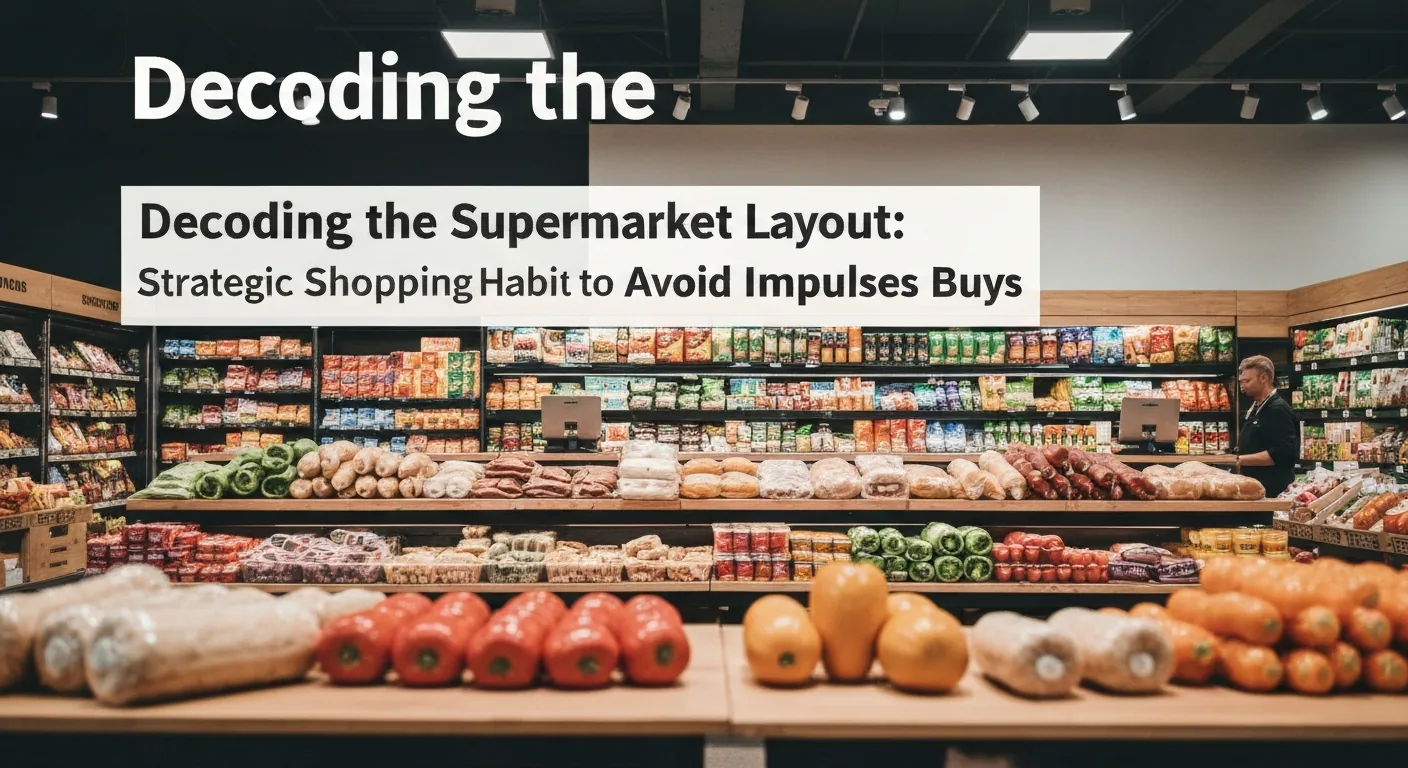
The Invisible Architecture of Food Retail\n\nHave you ever walked into a supermarket with a mental list of three items, only to walk out forty-five minutes later with a cart full of gourmet cheeses, artisanal sodas, and a lightbulb? If so, you are not alone—and more importantly, you are not entirely to blame. Modern supermarkets are masterpieces of behavioral psychology, architectural design, and sensory engineering. Every square foot of a grocery store, from the scent of the bakery to the width of the aisles, is meticulously calibrated to influence your decision-making and maximize your basket size.\n\nTo the untrained eye, a supermarket is just a convenient distribution center for food. To a retail strategist, however, it is a highly optimized maze designed to slow you down, stimulate your appetite, and disrupt your self-discipline. Understanding the hidden mechanics of supermarket layout is the first step toward reclaiming your agency, protecting your budget, and transforming your weekly grocery run from a series of impulse decisions into a strategic, efficient mission.\n\n## The Decompression Zone and Sensory Priming\n\nYour exposure to retail psychology begins the very moment you cross the threshold of the store. This entry area is known in the industry as the "decompression zone." It is a transition space designed to help you shift your focus from the hectic world outside to the sensory experience of shopping. It is no coincidence that you are almost always greeted by bright, colorful floral displays, misted fresh produce, or the warm, comforting scent of freshly baked bread.\n\nThese sensory cues serve a precise cognitive function. The smell of baking bread triggers hunger hormones, making you more likely to purchase ready-to-eat foods. The sight of vibrant flowers and dew-kissed lettuce primes your brain to associate the entire store with freshness, health, and abundance. This positive emotional state lowers your cognitive defenses. By putting you in a state of sensory pleasure immediately, the store gently nudges you to slow your pace and open your wallet.\n\n## The Perimeter-First Blueprint\n\nOne of the most effective shields against supermarket manipulation is the "perimeter-first" shopping strategy. In almost every major grocery store, the perimeter is where you will find the whole, single-ingredient foods: fresh produce, seafood, meat, and dairy. Conversely, the inner aisles are reserved for highly processed, shelf-stable foods, pre-packaged snacks, and sugary beverages.\n\nSticking to the outer edges of the store has a dual benefit. First, it aligns your cart with healthier choices, as whole foods are naturally concentrated there. Second, it limits your exposure to the middle aisles, which are designed as high-friction environments. When you navigate the inner aisles, you are bombarded with colorful packaging, promotional signage, and endless brand variations. By building your meal plans around the perimeter and only venturing into the middle aisles for specific, pre-determined staples—such as olive oil, beans, or whole grains—you dramatically reduce the cognitive load that leads to impulse buying.\n\n## Eye-Level is Buy-Level: The Shelf-Space Game\n\nOnce you do venture into the aisles, the psychological warfare becomes highly localized. Food manufacturers pay premium fees, known as "slotting allowances," to secure specific real estate on the shelves. The most valuable real estate is always at eye level, commonly referred to in the industry as the "bullseye zone."\n\nThe items placed at eye level are rarely the best value. Instead, they are typically high-margin brand-name products or items the store is eager to push. To find the best deals, you must physically shift your gaze. Healthy options and budget-friendly house brands are usually tucked away on the top shelves, while bulk items, generic packaging, and larger, more economical sizes sit on the bottom shelves. There is one notable exception to this rule: the lower-middle shelves. In the cereal, toy, and snack aisles, you will find eye-catching, brightly colored products placed at precisely the eye level of a child riding in a shopping cart, a deliberate design choice intended to spark pester power.\n\n## Decoding Endcaps and Cross-Merchandising\n\nThe ends of the aisles, known as "endcaps," are some of the most profitable locations in the entire supermarket. Because these displays face the main thoroughfares, they receive massive foot traffic. Many shoppers assume that endcap displays signify a sale or a special discount. In reality, manufacturers frequently pay extra to feature their products on endcaps, and the items displayed there are often sold at full retail price.\n\nFurthermore, retailers utilize a tactic called "cross-merchandising" on these endcaps to tempt your impulses. You might find a display of premium pasta, expensive marinara sauce, and high-end olive oil grouped together at the end of an aisle. By presenting a complete, convenient meal solution, the store bypasses your typical price-comparison habits. It is far easier to grab the entire bundle than to walk to the individual aisles and compare prices, even if doing so would save you fifty percent of the cost.\n\n## The Rhythm of the Store: Music, Motion, and Mirrors\n\nThe manipulation of your shopping behavior is not merely visual; it is auditory and physical as well. Have you ever noticed the background music playing during your grocery trip? Retailers rarely play fast, high-energy tracks. Instead, they opt for slow-tempo music. Studies show that slow music unconsciously causes shoppers to slow their walking pace, spend more time browsing, and ultimately purchase more items.\n\nPhysical design elements also play a quiet role. Some supermarkets use smaller, textured floor tiles in expensive sections, such as the organic produce or wine aisles. When your cart rolls over these tiles, the rapid clicking sound makes you feel as though you are moving too quickly, prompting you to slow down. Similarly, wide main thoroughfares encourage a leisurely stroll, while the lack of windows and clocks prevents you from keeping track of how much time has passed in your shopping journey.\n\n## Defeating Decision Fatigue at the Checkout Gauntlet\n\nThe final obstacle in your supermarket journey is the checkout line, and it is perhaps the most dangerous zone of all. By the time you reach the register, you have made dozens, if not hundreds, of small decisions. You have compared unit prices, evaluated nutritional labels, and resisted temptation multiple times. This leads to a well-documented psychological state known as "decision fatigue."\n\nAs your willpower depletes, your ability to resist instant gratification plummets. The checkout lane is engineered to exploit this vulnerability. It is narrow, forcing you to stand still next to refrigerated coolers of single-serve sodas, candy bars, high-margin magazines, and handy travel-sized items. Your brain, tired from decision-making, seeks a quick hit of dopamine or comfort, making you highly susceptible to grabbing a last-minute treat. Recognizing that decision fatigue is a physical and mental reality is your best defense; remind yourself that the checkout line is a gauntlet, and keep your eyes focused on your payment method.\n\n## Your Strategic Action Plan\n\nTo successfully navigate the supermarket without falling prey to these psychological traps, you need a structured strategy. Treat your grocery run like a mission rather than a leisure activity.\n\n- **Shop with a Categorized List:** Organize your shopping list according to the layout of your target store (e.g., Produce, Bakery, Pantry, Dairy, Frozen). This keeps you focused, minimizes backtracking, and reduces the time you spend wandering aimlessly through temptation-heavy aisles.\n- **Set a Strict Time Limit:** Give yourself a reasonable but firm deadline to complete your shopping. A time constraint prevents leisurely browsing, which is the primary catalyst for impulse purchases.\n- **Never Shop Hungry:** This classic advice is backed by science. Hunger increases your brain's sensitivity to high-calorie foods and activates acquisition-oriented mindsets, making you more likely to buy non-food items as well.\n- **Adopt the One-In, One-Out Rule:** If you decide to add an unplanned item to your cart, force yourself to put back an item of equal value. This introduces immediate friction to the decision-making process.\n\n## Reclaiming Your Cart\n\nBy understanding the underlying blueprint of the modern supermarket, you can transform your shopping environment from a psychological minefield into a neutral utility. Armed with a plan, a list, and a keen eye for retail tactics, you can protect your wallet, improve your nutrition, and reclaim control of your cart. Consistently practicing these habits turns supermarket traps into minor details, letting you shop on your own terms rather than the retailer's terms.