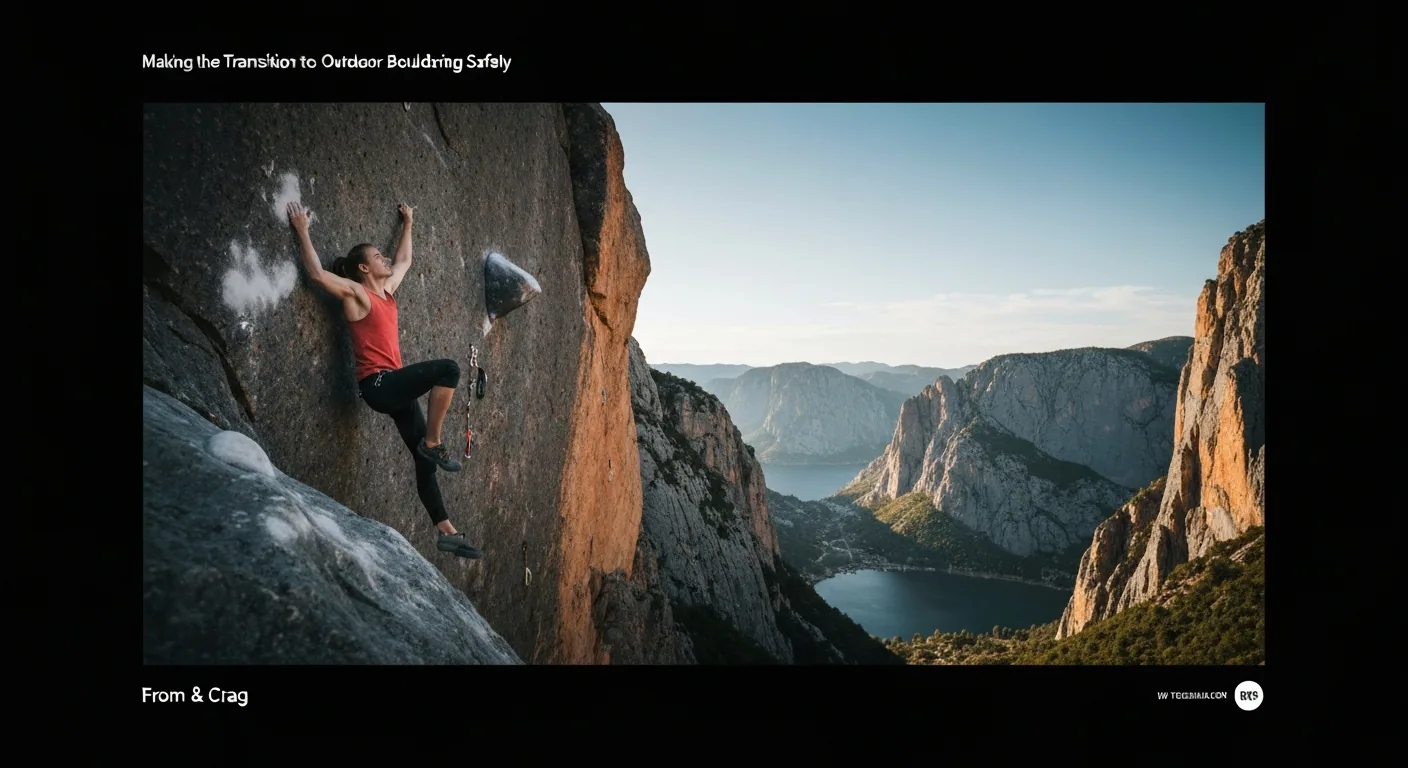
The Lure of the Real Rock
For many climbers, the local gym is a sanctuary. It is a social hub, a controlled environment, and a place where progress is measured in cleanly color-coded routes and predictable holds. But sooner or later, the call of the wild becomes too strong to ignore. The prospect of trading air conditioning and synthetic holds for fresh air and actual geological formations is an exciting milestone in any climber's journey. Transitioning from the gym to the crag is a rite of passage, yet it is far from a seamless transition.
When you step outside, the comforting safety net of the climbing gym disappears. There are no thick, wall-to-wall seamless foam carpets, no clearly marked taped paths, and no staff members on hand to ensure everyone is playing by the rules. Outdoor bouldering is raw, physically demanding, and inherently more risky. To ensure your first trip to the crag is memorable for the right reasons, you need to understand the fundamental shifts in technique, gear, and etiquette required to climb safely on real stone.
The Physical Shift: From Plastic to Stone
In the gym, routes are designed with human ergonomics in mind. Holds are bolted on to create flowing movements, and the path to the top is unmistakable. Outdoors, nature does not care about your comfort or your climbing grade. You will quickly discover that real rock features are much more subtle. A hold might be a tiny, sharp crystal, a sloper that relies entirely on friction, or a hidden pocket that you can only find by feeling around blindly.
Furthermore, the concept of route reading changes entirely. Without brightly colored tape or holds guiding your way, you must learn to read the chalk marks left by previous climbers or decipher the natural texture of the rock. Top-outs—the process of climbing over the lip of the boulder to stand on top—are also a massive shock to gym climbers. In most gyms, you simply grab the final hold and drop or climb down. Outdoors, you must physically hoist yourself over the top of the boulder, often on slopey, insecure terrain where a fall could be disastrous. Practicing top-out techniques on low boulders is highly recommended before tackling higher projects.
Gear Up: The Outdoor Bouldering Checklist
To climb safely outdoors, you cannot rely solely on your shoes and a chalk bag. You need to invest in dedicated outdoor gear designed to protect you from the unforgiving ground. The most critical piece of equipment is the crash pad. These portable foam mattresses are your only defense against the rocky terrain below.
Here is the essential gear you need before heading out:
- Crash Pads: Ideally, you should have at least two pads, but climbing with a group who can pool their pads together is even better. Look for a mix of a thick primary pad and a smaller, thinner starter pad to cover uneven ground.
- Climbing Shoes: Your gym shoes will work, but be prepared for them to wear down much faster on real rock. A stiffer shoe can help with tiny outdoor edges.
- Chalk and Brushes: Bring plenty of chalk, and crucially, a boar-hair brush. Avoid wire brushes, as they can permanently damage and polish the rock.
- Guidebook or Offline Navigation: Cell service is often spotty at bouldering areas. Having a physical guidebook or a downloaded digital guide is essential for finding the boulders and understanding the landing zones.
- First Aid Kit: Pack basic supplies like athletic tape, skin balm, bandages, disinfectants, and nail clippers.
The Golden Rules of Crash Pad Placement
Having crash pads is only half the battle; knowing how to arrange them is what keeps you out of the emergency room. Gym floors are flat and uniform, but the landing zone beneath an outdoor boulder is often a chaotic mix of tree roots, jagged rocks, slopes, and gaps.
When placing your pads, prioritize the potential fall zones. Think about where you are most likely to fall during each move of the climb. If a move is dynamic or horizontal, your trajectory will carry you away from the wall, meaning your pads need to be placed further back. Always overlap your pads slightly or use smaller blisses to cover the gaps between pads. A gap between two pads is a notorious ankle-breaker. Additionally, make sure the carry straps of the pads are tucked underneath so you do not trip on them when landing.
Master the Art of Spotting
In outdoor bouldering, your spotter is your lifeline. A common misconception among beginners is that the spotter's job is to catch the falling climber. In reality, attempting to catch a falling adult will only result in injuries for both parties. The true purpose of a spotter is to guide the climber's descent so they land feet-first on the crash pads, and to prevent them from tumbling backward off the pads onto rocks or trees.
To spot effectively, stand with an active, athletic stance with your knees slightly bent and hands up. Your fingers should be tucked together to prevent them from getting broken or bent backward during a fall. Keep your eyes locked on the climber's hips—the center of gravity—rather than their hands or feet. This allows you to anticipate their trajectory. Communication is key; always confirm that your spotter is ready before you pull off the ground.
Crag Etiquette and Outdoor Ethics
As climbers, we are guests in the natural environments we visit. Because outdoor bouldering has exploded in popularity, preserving these spaces is more important than ever. Following the principles of Leave No Trace (LNT) is non-negotiable if we want to keep these areas open for future generations.
Always carry out all of your trash, including organic waste like banana peels and apple cores, which do not decompose quickly in arid or alpine environments. Respect local flora by keeping your gear on established trails and avoiding trampling sensitive vegetation around the base of the boulders. When you finish a session, use your brush to clean off your chalk marks and tick marks. Leaving white lines all over the rock is an eyesore for non-climbing hikers and can ruin the experience of the next climber who wants to figure out the movements themselves.
Navigating the Mental Transition
One of the most overlooked aspects of transitioning to the outdoors is the mental game. It is completely normal to feel a sudden drop in your climbing grade when you first transition to real rock. A V4 climber in the gym might struggle on a V1 or V2 outdoors. The holds are less obvious, the feet require precise weight distribution, and the fear of falling on a portable pad is vastly different from falling on a foot of plush gym foam.
Do not let this discourage you. Treat your first few outdoor sessions as a learning experience rather than a performance check. Focus on high-volume climbing on easier grades to build your confidence and get a feel for how different rock types behave. Listen to your body and your instincts; if a landing looks too sketchy or a move feels too high-risk, there is no shame in backing down. The rock will always be there for another day when you are better prepared.
Building a Sustainable Practice
Making the leap to outdoor bouldering is one of the most rewarding steps you can take in your climbing journey. It connects you with nature, challenges your problem-solving skills in new ways, and introduces you to a passionate, supportive community. By prioritizing safety, investing in the right gear, mastering spotting, and respecting the environment, you ensure that this transition is both safe and sustainable. Stay humble, keep learning, and enjoy the process of becoming an outdoor climber.