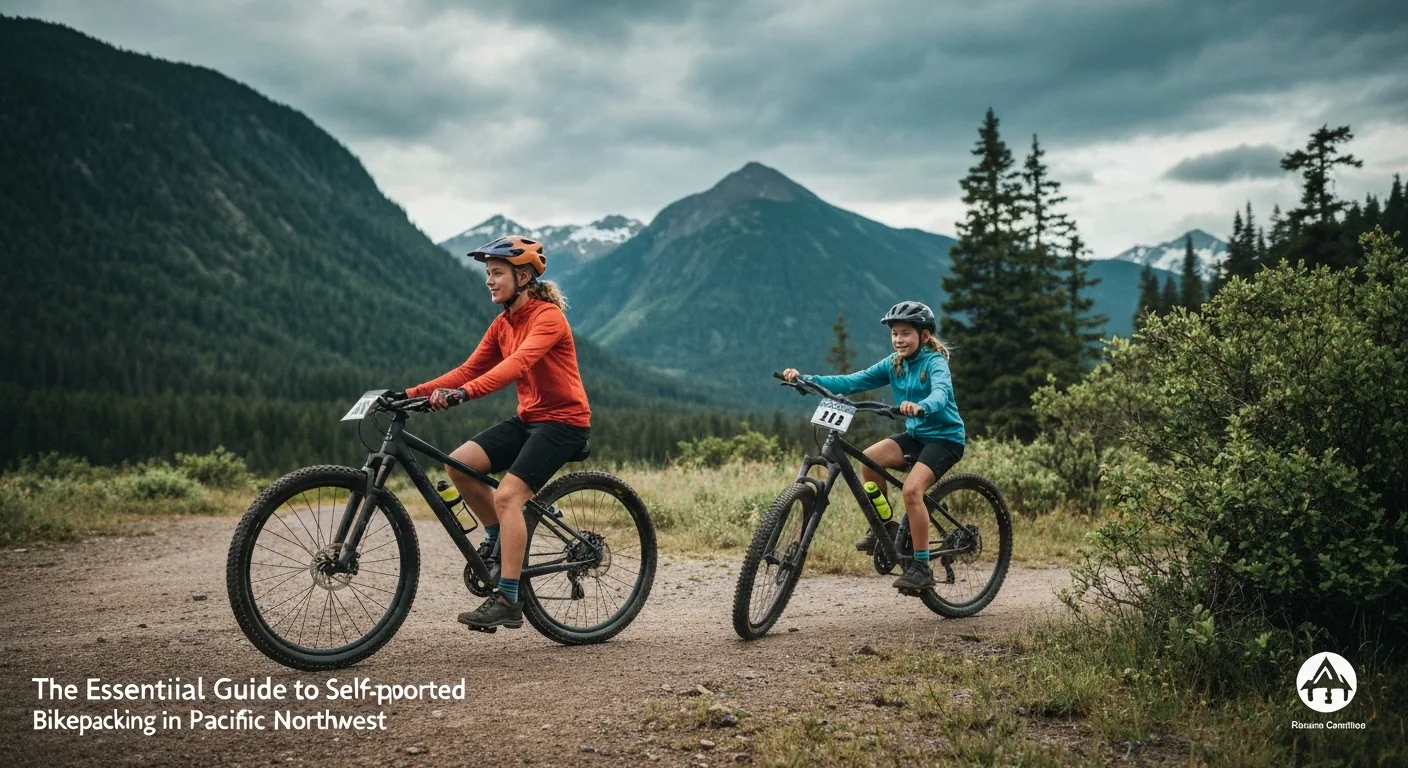
The Pacific Northwest (PNW) is a mythical landscape for outdoor enthusiasts. With its towering Douglas firs, rugged volcanic peaks, and endless networks of logging roads and singletrack, it represents the ultimate playground for self-supported bikepacking. Combining the self-reliance of backpacking with the range and speed of cycling, bikepacking allows you to explore the deep, damp wilderness of Oregon, Washington, and British Columbia in a way few other mediums can match.
However, the very elements that make the Pacific Northwest so spectacular—its relentless topography, unpredictable weather, and dense forests—also present unique challenges. Venturing into these wild terrains requires careful planning, robust gear, and a deep understanding of backcountry self-sufficiency. This guide will walk you through everything you need to know to successfully plan, pack for, and navigate your first multi-day off-road cycling adventure in this breathtaking corner of the world.
Understanding the Diverse PNW Terrain
The Pacific Northwest is not a monolith; its geography is sharply divided by the Cascade Mountain Range. To the west lies the wet, temperate maritime zone, characterized by coastal rainforests, steep coastal hills, and loam-rich singletrack that can turn into slick mud at a moment's notice. To the east of the Cascades, the rain shadow creates a vast high-desert plateau marked by ponderosa pines, sandy soil, volcanic rock, and extreme temperature fluctuations.
When planning your route, you must decide which environment suits your style. Western routes, like the Olympic Adventure Trail, offer lush greenery but require gear that can withstand constant moisture. Eastern routes, such as the Oregon Outback, offer wide-open skies and fast-rolling gravel but demand careful water management due to long stretches between natural water sources.
Selecting and Tuning Your Bikepacking Rig
Your bicycle is your lifeline in the backcountry, and choosing the right machine depends on the terrain you plan to conquer. For gravel-heavy routes, a dedicated adventure gravel bike with drop bars and tire clearance for at least 45mm tires is ideal. For rugged singletrack or routes utilizing abandoned, unmaintained fire roads, a hardtail mountain bike with a suspension fork and 2.2-inch to 2.4-inch tires will provide the necessary control and comfort.
Regardless of the frame type, your gearing is the most critical component. The Cascades are notoriously steep, with forest service roads frequently exceeding double-digit gradients. Ensure your bike is equipped with an ultra-low climbing gear—such as a 1x drivetrain with a 30-tooth chainring paired with a 50-tooth cassette, or a sub-compact double chainring setup. Test your fully loaded bike on a local hill before you depart; you will quickly realize that you can never have a gear that is too easy when climbing with thirty pounds of gear.
The Art of Packing and Weight Distribution
Unlike traditional cycle touring, which relies on heavy steel racks and wide panniers, modern bikepacking utilizes soft bags lashed directly to the bicycle frame. This streamlined setup keeps the bike's profile narrow, allowing you to navigate tight singletrack and clear obstacles without clipping trees or bottoming out.
A standard bikepacking setup consists of three primary bags: a seat pack, a frame bag, and a handlebar roll.
- The frame bag sits in the center triangle of your bicycle and is the best place to pack your heaviest items, such as tools, a spare tube, a stove, and water bladders. Keeping this weight low and centered preserves the bike's natural handling characteristics.
- The seat pack is perfect for light, bulky items that you will not need until you camp, such as a sleeping bag, bivvy, or spare dry clothing. Ensure this bag is packed tightly to prevent annoying sway while pedaling out of the saddle.
- The handlebar roll is ideal for your shelter system, sleeping pad, and lightweight layers. Take care to ensure the bag does not rub against your front tire or crimp your brake and shifter cables.
Mastering the PNW Weather and Layering
In the Pacific Northwest, preparing for the weather is a matter of safety, not just comfort. Hypothermia is a real danger, even during the summer months, as temperatures at high elevations can plummet rapidly during sudden rainstorms. The golden rule of PNW packing is to avoid cotton entirely and rely on a strict three-layer system.
Your base layer should consist of synthetic materials or merino wool, which wick sweat away from your skin and retain warmth even when damp. The mid-layer provides insulation; a lightweight, packable synthetic jacket is preferred over down because synthetic fibers continue to trap heat if they get wet. Finally, your outer layer must be a high-quality, breathable waterproof shell. Do not skimp on your rain jacket; it will serve as your shield against wind, rain, and overgrown trailside brush.
Hydration, Nutrition, and Wilderness Safety
Water is abundant in the western cascades, with pristine mountain streams crossing your path frequently. However, you must always treat your water to prevent waterborne pathogens like Giardia. A lightweight squeeze filter or gravity filter is essential. In the eastern high desert, water is scarce, requiring you to carry up to six liters of capacity and map out reliable water cache locations in advance.
On a self-supported trip, your engine requires immense fuel. Plan to consume between 3,500 and 5,000 calories per day, focusing on nutrient-dense, calorie-dense foods that do not require complex preparation. Nuts, nut butters, dehydrated meals, tortillas, and cheese are staples of the bikepacker’s diet.
Additionally, the PNW is active bear and cougar country. When camping, particularly in Washington and British Columbia, you must store your food securely. Use a bear-resistant canister or master the art of a proper bear hang at least one hundred feet away from your sleeping area. Always carry bear spray in an easily accessible location, such as on your handlebar bag or a harness, rather than buried deep inside your frame pack.
Navigation and Planning Off the Grid
Cellular service is virtually non-existent once you dip into the river canyons and mountain passes of the PNW. Relying on live smartphone maps is a recipe for getting lost. Instead, utilize dedicated GPS cycling computers or robust offline navigation apps on your smartphone, such as RideWithGPS or Gaia GPS.
Always download your maps and route files for offline use before leaving home, and carry a compact, high-capacity power bank to keep your electronics charged. For peace of mind on remote journeys, consider carrying a satellite messenger. These devices allow you to send check-ins to loved ones, track your progress, and summon emergency services if you experience a catastrophic mechanical failure or medical emergency.
Leave No Trace and Environmental Stewardship
The pristine wilderness of the Pacific Northwest is fragile. As bikepackers, we have a collective responsibility to minimize our impact on these wild spaces. Adhere strictly to the principles of Leave No Trace. Camp only on durable surfaces, pack out all of your trash (including food scraps and organic waste), and dispose of human waste properly by digging a cathole at least six inches deep and two hundred feet away from water sources.
Furthermore, respect trail closures and local trail etiquette. Yield to hikers and equestrians; stop your bike, step off the trail on the downhill side, and speak friendly greetings to avoid startling horses. By riding responsibly, we ensure that these incredible routes remain open and welcoming to the cycling community for generations to come.
The Mental Shift of Self-Supported Travel
Perhaps the most challenging aspect of bikepacking is not the physical climbing or the technical riding, but the mental adaptability required. Out in the wild, things will occasionally go wrong. You might get a flat tire in a downpour, miss a turn and climb an extra mile, or find your planned campsite occupied.
Embrace these moments as part of the adventure. Self-supported travel forces you to slow down, problem-solve in real-time, and tune into the rhythm of the natural world. When you finally reach the summit of a mountain pass, looking down at the valley you traversed powered entirely by your own two legs and carrying everything you need to survive, you will realize that the struggle was not just worth it—it was the very point of the journey.