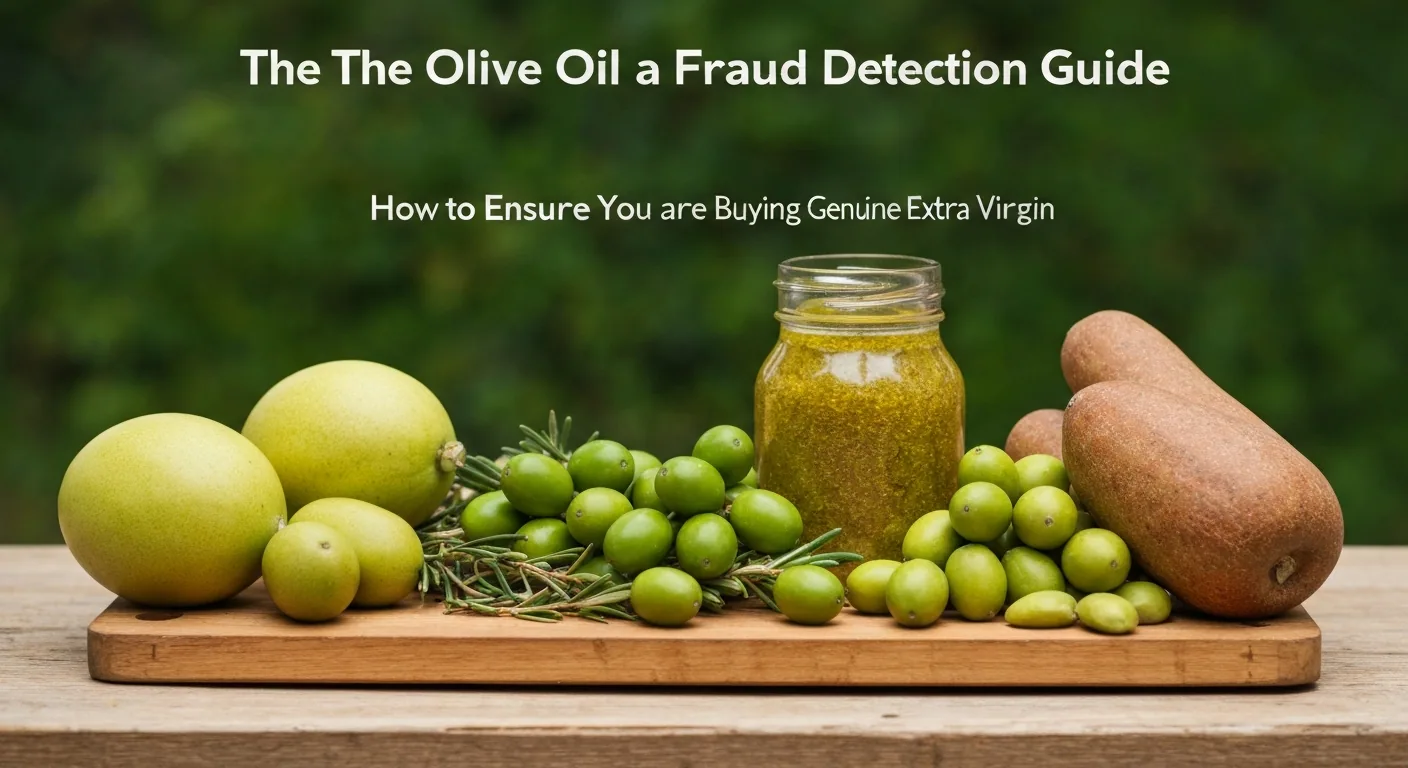
The Dark Side of Liquid Gold
Olive oil has earned its status as a staple of healthy, flavorful cooking. Revered for its heart-healthy monounsaturated fats and rich antioxidant profile, extra virgin olive oil is the undisputed king of the kitchen pantry. Yet, behind its pristine reputation lies a dark, lucrative secret: olive oil is one of the most frequently counterfeited and adulterated food products in the world. From diluting premium oils with cheap seed oils like canola or hazelnut to mislabeling low-grade, chemically refined olive oil as "extra virgin," food fraud in the olive oil industry is a multi-million-dollar global enterprise. For consumers, this means that the expensive bottle on your kitchen counter might be little more than colored industrial seed oil with a fancy label.
What "Extra Virgin" Actually Means
To protect yourself from fraud, you must first understand what makes an olive oil truly "extra virgin." This is not just a marketing buzzword; it is a strict chemical and sensory grade defined by international standards. By definition, extra virgin olive oil must be extracted solely by mechanical means without the use of high heat or chemical solvents. It is essentially fresh-squeezed fruit juice. Chemically, it must have a free acidity level of less than 0.8 percent. Sensorially, it must possess zero defects and exhibit some degree of fruitiness, bitterness, and pungency. When producers blend inferior oil or chemically treat spoiled olives, they strip away these health benefits and distinct flavor profiles, rendering the product fraudulent if sold as extra virgin.
Decoding the Label: Red Flags to Avoid
The average grocery store shelf is a minefield of misleading marketing. To spot a fake, you must learn to read past the front label. One of the biggest red flags is the phrase "Bottled in Italy" or "Imported from Italy." Italy is a major hub for packaging olive oil, but much of what is bottled there is imported from Spain, Greece, Tunisia, or Morocco, blended together, and shipped out. While this isn't always illegal, it often indicates a lack of traceability and quality control. Other terms to avoid include "pure olive oil," "light olive oil," or "extra light." These are marketing euphemisms for highly refined, chemically deodorized oils that lack the healthy polyphenols and vibrant taste of true extra virgin olive oil.
The Golden Standards: Green Flags on the Bottle
When shopping for genuine extra virgin olive oil, look for specific clues that prove authenticity and care:
- **Harvest Date**: High-quality producers proudly display the harvest date (not just a "best by" date). Olive oil does not improve with age; you want to buy oil from the most recent harvest, ideally within the last 12 to 18 months.
- **Specific Origin**: Look for oils that name the specific estate, region, or mill where the olives were grown and pressed, rather than a vague list of multiple countries.
- **Third-Party Certification Seals**: Look for official seals of authenticity. In the United States, look for the California Olive Oil Council (COOC) seal. Internationally, look for Protected Designation of Origin (PDO) or Protected Geographical Indication (PGI) seals, which guarantee strict quality standards and geographic tracing.
The Packaging Matters
Never buy olive oil sold in clear glass or plastic bottles. Light is one of the greatest enemies of olive oil, accelerating oxidation and turning a premium extra virgin oil rancid in a matter of weeks. Authentic producers who care about their product will always package their oil in dark green or amber glass bottles, or in opaque metal tins. This protects the delicate oil from light damage on its journey from the mill to your kitchen. If you see a bottle of extra virgin olive oil sitting on a brightly lit grocery shelf in a clear glass container, leave it behind.
Debunking the Fridge Test Myth
You may have heard of the "fridge test" as a foolproof way to verify extra virgin olive oil at home. The theory goes that because extra virgin olive oil contains high levels of monounsaturated fats, it should solidify or become highly viscous when refrigerated, while adulterated seed oils will remain liquid. Unfortunately, this test is highly unreliable. While some genuine olive oils will solidify, others will not due to variations in olive varietals, harvest timing, and regional climates. Furthermore, seed oils chemically blended with a small amount of wax or saturated fats can also solidify in the fridge. Do not rely on this method; instead, trust your senses of smell and taste.
How to Perform a Sensory Test at Home
The ultimate test of authenticity happens in your kitchen using your nose and palate. Professional tasters use specialized blue glasses to prevent color from influencing their judgment, as color is not an indicator of quality. You can perform a similar test at home using a small glass:
- Warm the glass in your hands to release the oil's volatile aromas. Cover the top with your other hand, swirl the oil gently, and then take a deep sniff. Genuine extra virgin olive oil should smell fresh, vibrant, and green—reminiscent of freshly cut grass, green tomatoes, artichokes, herbs, or green apples. If it smells musty, metallic, greasy, or like wet cardboard, it is rancid or adulterated.
- Next, take a small sip of the oil. Slurp it noisily, drawing air into your mouth to vaporize the oil across your tongue. You should taste bitterness on the sides of your tongue, followed by a distinct peppery kick or burning sensation in the back of your throat when you swallow. This throat burn is caused by oleocanthal, a powerful anti-inflammatory antioxidant unique to high-quality extra virgin olive oil. If it tastes greasy, heavy, or completely neutral, it is not genuine.
The Price Point Reality Check
While everyone loves a bargain, true extra virgin olive oil is expensive to produce. Cultivating, harvesting, and pressing olives within hours of picking requires immense labor, specialized equipment, and careful management. If you see a large bottle of "extra virgin olive oil" selling for an unbelievably low price, it is almost certainly a fake or a highly degraded product. While a high price tag doesn't automatically guarantee quality, a suspiciously low price is a guaranteed red flag. Expect to pay a fair price for a real, health-promoting agricultural product.
Storing Your Liquid Gold
Once you have successfully sourced a bottle of genuine extra virgin olive oil, you must protect your investment. Keep your oil stored in a cool, dark place away from heat sources like your stovetop or oven. Ensure the cap is tightly sealed after every use to prevent exposure to oxygen, which quickly degrades the oil's beneficial antioxidants and delicate flavor. Use your oil generously; once opened, a bottle should ideally be consumed within two to three months to experience its maximum health benefits and culinary potential.