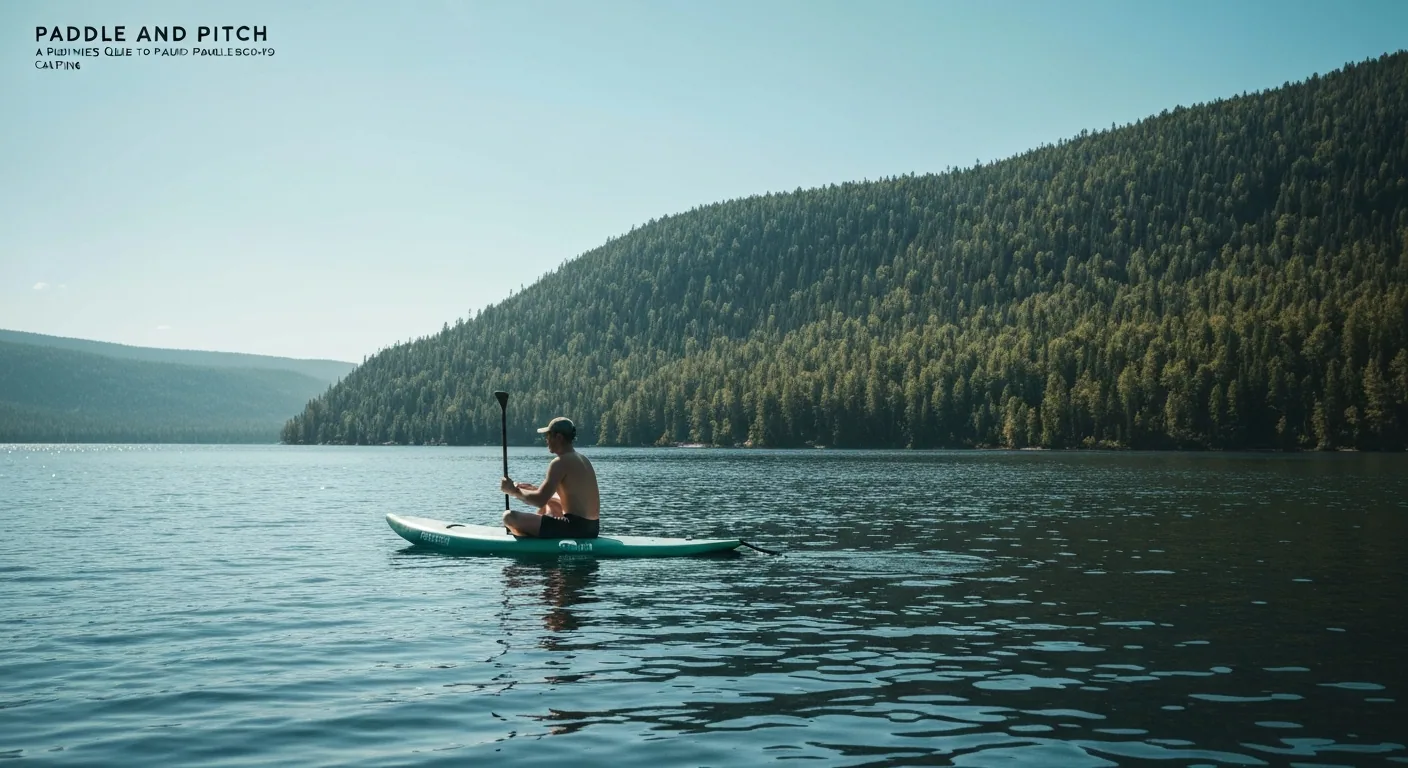
The Appeal of SUP Camping
There is a distinct magic in loading everything you need for a weekend onto a single floating platform and paddling away from the noise of modern life. Stand-up paddleboard (SUP) camping—affectionately known as 'SUP packing'—combines the minimalist, self-reliant spirit of backpacking with the fluid grace of paddleboarding. By trading your hiking boots for a paddle, you open up access to secluded shorelines, quiet coves, and river campsites that are entirely unreachable by foot. If you are already comfortable on a paddleboard and have some basic camping experience, combining these two passions is the natural next step in outdoor adventure.
Selecting Your Vessel
Before you start packing your sleeping bag, you need to evaluate your board. While you can technically camp off almost any paddleboard, a dedicated touring or expedition SUP will make your journey significantly more enjoyable. These boards are typically longer (eleven to fourteen feet), wider, and feature a displacement hull (a pointed nose) that cuts through water and tracks straight over long distances. Crucially, touring boards have a higher weight capacity and come equipped with multiple D-rings and bungee tie-down points on both the nose and the tail. Ensure your board's maximum weight capacity comfortably exceeds the combined weight of you, your camping gear, food, and water.
The Dry Bag Strategy
Waterproof storage is the absolute cornerstone of SUP camping. Unlike canoeists or kayakers who have protective hulls to shield their gear, everything on a paddleboard is exposed to splashing, rain, and the occasional capsizing event. To keep your gear bone-dry, invest in heavy-duty, submersible dry bags with roll-top closures. Instead of packing everything into one massive sixty-liter bag, use a modular system of three or four smaller dry bags (ten to twenty liters each). This makes it much easier to balance the weight on your board, organize your gear, and locate specific items on the water without unpacking your entire camp.
How to Pack and Balance Your Board
Loading a paddleboard is an exercise in physics and balance. A poorly distributed load will make your board unstable, difficult to steer, and exhausting to paddle. The golden rule of SUP packing is to keep the center of gravity low and centered. Place your heaviest items, such as water reservoirs and camp stoves, as close to the center of the board (near the carrying handle) as possible, keeping them flat against the deck. Distribute the remaining weight between the front and rear deck bungees, aiming for a roughly 60/40 split with slightly more weight on the nose to help the board cut through waves, or vice versa depending on your board's specific shape and water conditions.
Securing Your Gear
Never rely solely on standard deck bungees to hold your heavy camping gear in place during a long trip. Bungee cords stretch and can easily fail or allow bags to slip off in rough water. Instead, use adjustable cam straps or heavy-duty utility straps threaded through your board's metal D-rings to cinch your dry bags down tightly. Give your board a gentle shake test on land before you launch; if any gear shifts, tighten the straps. Additionally, always tie a safety line from your bags to the board's leash cup or D-rings, ensuring that if you do flip, your life's comforts do not float downriver without you.
Safety on the Water
Safety should always be your top priority when venturing into remote waterways with a loaded board. Always wear a high-quality, comfortable Personal Flotation Device (PFD) designed for paddling. Keep a safety whistle attached to your PFD, along with a waterproof communication device, such as a cell phone in a floating dry case or a VHF radio. Depending on the waterway, a leash is vital: use a coiled leash for flatwater and lakes, but switch to a quick-release waist leash for moving rivers where a standard ankle leash can pose a dangerous snag hazard. Let someone on land know your exact route and expected return time.
Choosing and Pitching Camp
As your paddling day winds down, start scouting for a suitable campsite well before dusk. Look for a flat, durable surface above the high-water mark, keeping in mind that river levels and tides can change dramatically overnight. Once you land, your very first task is to secure your paddleboard. Drag it completely out of the water and tie it securely to a tree or heavy log; wind and rising waters have claimed many unattended boards during the night. When pitching your tent or hammock, choose established campsites whenever possible to minimize your impact on the delicate shoreline environment.
The Camp Kitchen and Hydration
Paddling all day burns an immense amount of calories, making a hearty camp meal incredibly rewarding. Keep your camp kitchen simple with a lightweight canister stove, a single pot, and dehydrated meals that only require boiling water. Water management is critical: carrying days worth of freshwater is incredibly heavy, so plan to pack a reliable gravity filter or pump filter to treat water from the lakes or rivers you traverse. Always store your food in scent-proof bags or bear-resistant containers, keeping them well away from your sleeping area to avoid uninvited nocturnal visitors.
Leaving No Trace on the Water
Because riparian zones are incredibly fragile ecosystems, SUP campers must practice strict Leave No Trace principles. Never wash dishes directly in the lake or river; instead, carry water seventy paces away from the shoreline and use biodegradable soap. Pack out all trash, including food scraps and organic waste. When nature calls, use established restrooms if available; otherwise, dig a proper cathole deep in the woods, far from the water's edge, or pack out human waste using a dedicated waste-bag system if required by local regulations. By leaving the waterway pristine, you preserve its beauty for future adventurers.
Preparation and Final Checklist
Before you push off from the shore, take the time to run through a mental checklist and do a test paddle. A fully loaded board handles very differently than an empty one. Practice mounting and dismounting your loaded board in shallow water so you get a feel for its new center of gravity and momentum. Ensure that quick-access items like sunscreen, hydration, maps, and your first-aid kit are easily reachable without unstrapping your main dry bags. With a well-balanced board and a prepared mind, you are ready to transition from a casual day-paddler to a self-sufficient water explorer.